
Da Nang built its reputation on sand. The coast runs for kilometers, from the lively main beach right in the city to quiet stretches under the Marble Mountains and wild little coves out on the Son Tra peninsula. They are not all the same, and the right one depends on whether you want facilities, peace, snorkeling, or a beginner surf lesson. Here is the honest breakdown of each, plus how to swim safely and when to go.
The short answer
Best all-round
My Khe
My Khe from center
~3 km
Swim season
~Apr - Sep
Lifeguards (summer)
~4:30am - 7pm
Surf season
~Sep - Mar
Sunbed + umbrella
~50,000 - 100,000 VND
Which beach in Da Nang is right for you?
Most visitors only need one beach, so start with what you came for. If you want the classic beach day with lifeguards, sunbeds, and food nearby, go to My Khe. If you want a slower morning near cafes and coworking, pick My An. For peace and long walks, drive south to Non Nuoc. For snorkeling and near-empty coves, take a motorbike onto Son Tra. Here is the quick version.
| Vibe | Best for | Access from center | |
|---|---|---|---|
| My Khe | Lively, iconic, busy at sunset | First-timers, families, swimmers, mellow surf | ~3 km, central |
| My An / An Thuong | Relaxed, cafes and nomads | Slow beach days, food plus beach | Same strip, just south |
| Non Nuoc | Quiet, pine-backed, scenic | Peace, long walks, beginner surf | ~8 km, ~10 min south |
| Son Tra coves | Wild, secluded, jungle meets sea | Snorkeling, escaping crowds | Peninsula, motorbike or taxi |
| Nam O | Rugged, local, stronger surf | Experienced surfers, off-track feel | Northwest of the city |
My Khe Beach: the main event
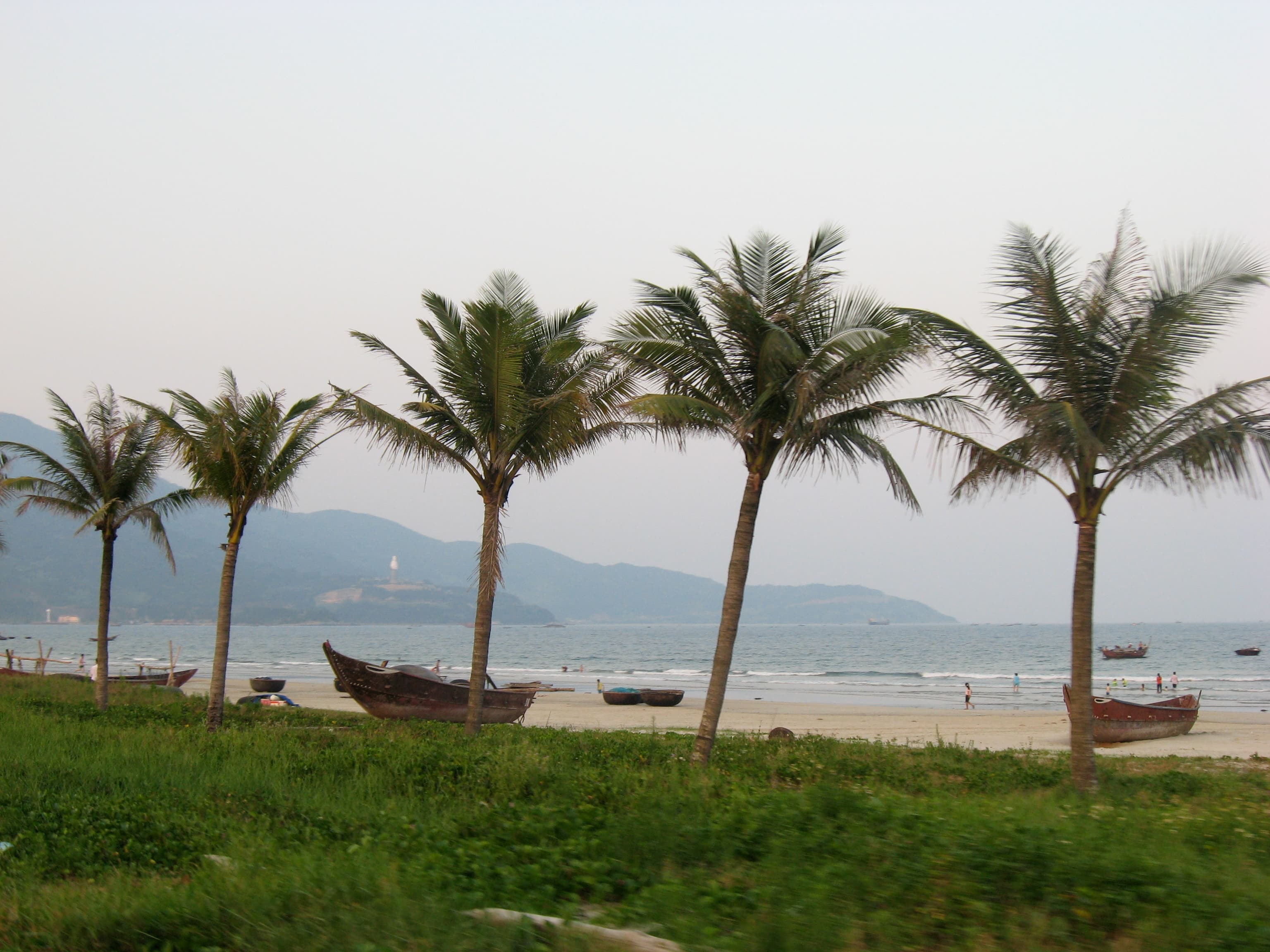
My Khe is the beach most people mean when they say Da Nang. It is part of a roughly 10 km sweep of soft white sand that runs from the foot of Son Tra south toward Non Nuoc, and the core swimming stretch sits about 3 km from the city center along Vo Nguyen Giap street. The water is calm and clear for much of the dry season, roughly March to September.
It is also the beach with the most going on. You will find fee-based sun chairs, showers and vendors, exercise equipment along the promenade, and lifeguards on duty. Motorbike parking along the seafront is usually free. Come at about 5pm and you will see the beach fill up with locals after work, which is the best time to feel the city's daily rhythm. The city tourism board profiles My Khe as one of the ten most beautiful beaches in Asia, and Tripadvisor ranked it 6th in Asia in its 2024 Travelers' Choice awards.
China Beach
My Khe and the sand just south of it is the stretch US soldiers nicknamed China Beach during the Vietnam War. You will still see the name in older guidebooks, though locals just call it My Khe today.
My An and the An Thuong quarter: beach plus cafes
My An is technically the same long sand strip as My Khe, just further south, but it feels different. Behind it sits An Thuong, the area many people call the foreigner quarter, packed with smoothie bowls, craft beer, coworking spaces, and Da Nang's most concentrated nightlife strip. It suits a slow beach day where you swim, then walk five minutes to a good coffee.
This is the natural base for digital nomads and anyone who wants food and a beach within one short walk. Several hotel complexes along the seafront run beach clubs with DJs and sunbeds here too. If you are still deciding where to sleep, our where to stay in Da Nang guide weighs An Thuong against the other neighborhoods.
Non Nuoc Beach: quiet sand under the Marble Mountains
Non Nuoc sits at the foot of the Marble Mountains, about 8 km southeast of the center and roughly 10 minutes south of My Khe. It runs for about 5 km, backed by Casuarina pine forest, and it is noticeably quieter and cleaner than the main beach. Lifeguards are on duty, and access and parking are free. This is the beach for long walks and a calmer morning.
It also pairs perfectly with a half-day at the caves and pagodas next door. You can swim, then climb the marble peaks in the same trip; our Marble Mountains guide covers the tickets and cave route. For surfers, Non Nuoc has a gentle slope and smaller waves, which makes it a good beginner spot in the summer months.
Son Tra peninsula: hidden coves and snorkeling
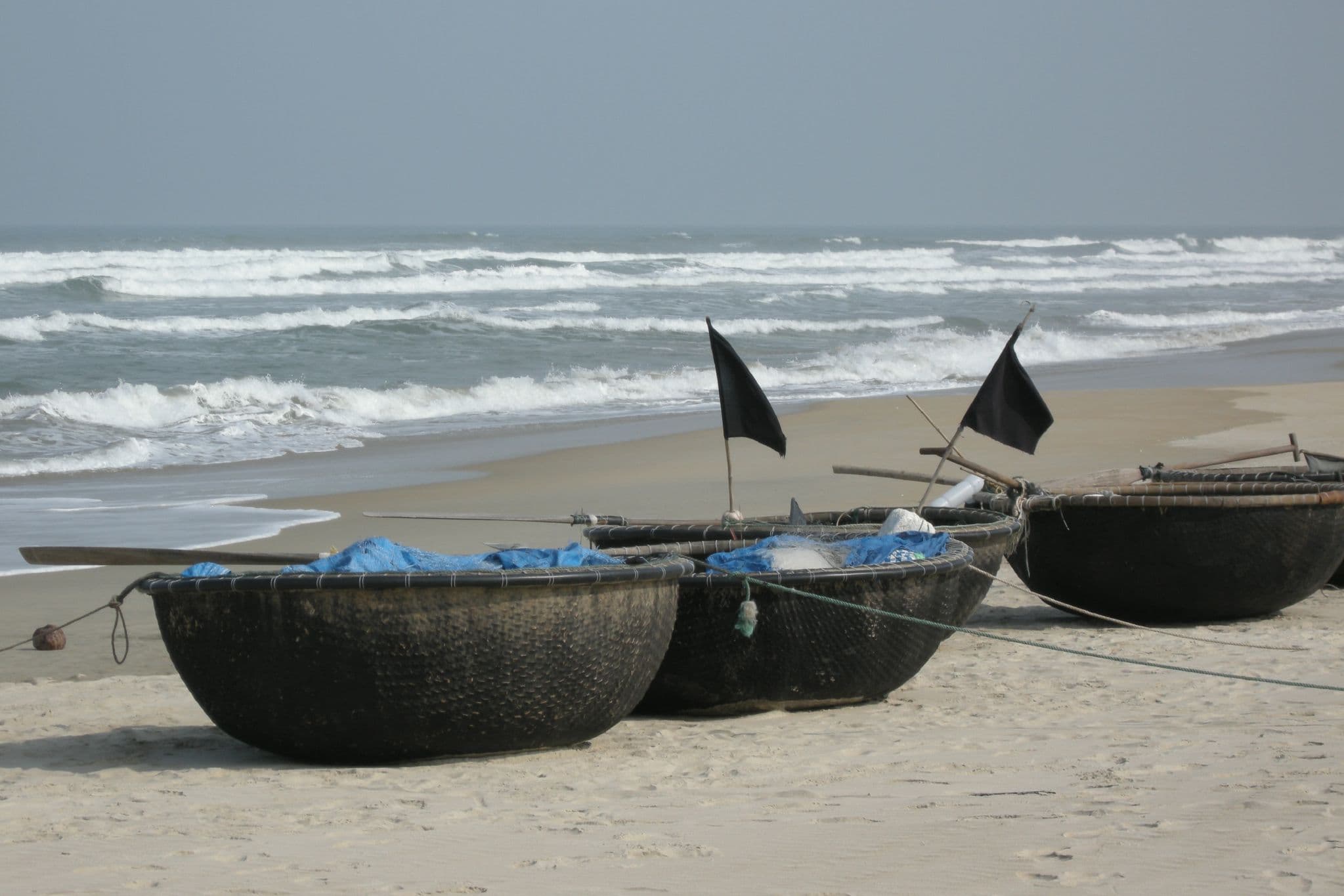
For the wild side of Da Nang's coast, head onto the Son Tra peninsula, the green headland north of the city. Its beaches include Bai Bac (North Beach), Da Den, Bai But, Bai Rang, Bai Nam (South Beach), and Tien Sa. Several are small coves tucked between jungle and sea, with rocky outcrops and coral reefs you can see from shore. At the calmer ones you can rent a hut, order fresh seafood, and snorkel.
A few things to know before you go. Some coves, such as Bai Nam and parts of Bai But, are effectively controlled by resorts, and access to parts of the peninsula has been restricted at times, so check before you drive in. Man Thai, on the northern edge, is a quiet local fishing beach with few amenities, and Tien Sa charges a small gate fee of around 10,000 VND. You reach all of this by motorbike or taxi, not on foot. Our Son Tra peninsula guide covers the full loop, including the Lady Buddha statue above the coves.
Beach clubs and beachfront resorts
You do not need to book a resort to enjoy the beach. A sunbed and umbrella from a beachfront vendor runs about 50,000 to 100,000 VND for the day. Beach clubs sit a step up: some have free regular entry with a minimum spend, and a typical visit runs around 200,000 to 800,000 VND per person. Named spots along My Khe and An Thuong include Paradise Beach Bar and Cinema, which shows outdoor films in the evening, plus Nautica, Kala Kala, Maia, and Apocalypse.
If you would rather stay on the sand, the My An and My Khe strip has the big beachfront resorts, including Furama, TIA Wellness, and Premier Village, most a short walk from the water. These are indicative 2026 prices from operator and blog pages, so treat them as a guide, not a quote, and expect changes.
Surfing in Da Nang: season, spots, and lessons
Da Nang has a real, if modest, surf scene. The main season runs about September to March, when the northeast monsoon pushes the bigger swell. Peak waves reach about 2 to 5 feet, and the water stays warm all year, roughly 25 to 30 degrees C, so you do not need a wetsuit. From April to August the waves are smaller and cleaner, which is easier for a first lesson.
- My Khe: all levels. A mellow, forgiving beach break with multiple peaks, good for learners and longboarding. The north end is stronger in the main season, the south end gentler in summer.
- Non Nuoc: beginners. A gentle slope and smaller waves, best from about April to August.
- Nam O: experienced surfers. Stronger, rugged beach breaks northwest of the city, with an off-track feel.
Local surf shops rent boards and run lessons, and the best conditions at My Khe tend to come when a northeast swell meets a light offshore wind, often around October.
Beach safety: rip currents, flags, and lifeguard hours
Da Nang's beaches are patrolled, but the sea still deserves respect. Under the city's 2026 guidance, lifeguards are on duty daily from about 4:30am to 7pm during the summer season, which runs March 15 to September 30. Do not swim outside those hours or outside the marked zones. Nearly 100 lifeguards work the main beaches, backed by jet-ski patrols and rescue vehicles.
Read the flags: green means safe, red means dangerous currents and no swimming. Rip currents are most likely during the monsoon (roughly September to March) and worst from October to February, and typhoons can hit especially in October and November. Warning signs of a rip include darker water, an odd patch of smaller waves, and debris moving steadily offshore.
If a rip current catches you
Stay calm and do not fight it head-on. Float to save energy, raise an arm and call for help, and swim sideways along the beach, out of the flow, before you turn back to shore. Panic and swimming straight against the current are what exhaust people.
Best time of day and year for Da Nang beaches
For the year, February to May has the most reliable weather, and the dry season (about April to September) has the calmest, clearest sea for swimming. October to February is the rougher, wetter half, with higher waves and the typhoon window. For the day, early morning and late afternoon are the sweet spots: the sand is cooler, the light is better, and you avoid the fierce midday sun.
If you are lining up a whole trip around the weather, our best time to visit Da Nang guide breaks it down month by month, and the Da Nang itinerary shows how to fit a beach half-day into a full plan.
A beach day with no hotel room yet?
One of the best beach days in Da Nang is the one most people miss: your arrival morning before check-in, or your last afternoon before a night flight. My Khe and Non Nuoc are only a short drive from the airport, so you can go straight from the terminal to the sand, or squeeze in one more swim after checkout. The catch is your luggage. Beach clubs will not watch a suitcase, and dragging bags across the sand is no fun.
Beach then flight
Store the bags, shower, and swim hands-free until it is time to go.
Near Non Nuoc
Ngu Hanh Son
By the day
60,000 VND (up to 24h)
Open
7am - 10pm daily
New to Stow? See how luggage storage in Da Nang works.
Questions people ask
Which is the best beach in Da Nang?
My Khe is the best all-round choice. It is central, has lifeguards and sunbeds, and ranked 6th among Asia's best beaches in Tripadvisor's 2024 Travelers' Choice awards. For quieter sand, choose Non Nuoc under the Marble Mountains; for wild coves, head onto the Son Tra peninsula.
Is My Khe beach clean?
Yes. My Khe is widely praised as clean and well maintained, with monitored sand and daily lifeguards. Some reviews note conditions can vary, and storms in October and November can wash up seaweed or debris, but on a normal dry-season day it is a good, clean swimming beach.
Can you swim at Da Nang beaches, and is it safe?
Yes, in the dry season (about April to September) and inside the flagged, lifeguard-patrolled zones. Lifeguards work roughly 4:30am to 7pm in summer. Green flag means safe, red flag means dangerous currents and no swimming. Do not swim outside those hours or those zones.
When is the best time to visit Da Nang's beaches?
February to May has the most reliable weather, and the dry season (about April to September) has the calmest, clearest sea for swimming. October to February brings higher waves, rip currents, and the typhoon window, so treat the water with more caution then.
Can you surf in Da Nang, and when?
Yes. The main surf season runs about September to March, when the northeast monsoon brings the bigger swell. My Khe is a mellow, forgiving beach break that suits beginners and longboarders. Waves are smaller and gentler from April to August, which is fine for first lessons.
Are there rip currents in Da Nang?
Yes. They are most common during the monsoon (roughly September to March) and worst from October to February. Warning signs include darker water, smaller waves in one spot, and debris moving offshore. If caught, stay calm, float, signal for help, and swim sideways out of the flow.
What is the difference between My Khe and Non Nuoc?
My Khe is central, lively, and full of facilities, from sunbeds to beach clubs, and it gets busy at sunset. Non Nuoc, about 8 km south under the Marble Mountains, is quieter and cleaner, backed by pine forest, and better for long walks and beginner surf.
Are there hidden beaches near Da Nang?
Yes, on the Son Tra peninsula. Bai But, Bai Rang, Bai Nam, and Da Den are small coves between jungle and sea, some with snorkeling over rocky reefs. You reach them by motorbike or taxi, and a few are controlled by resorts, so check access before you go.
How much do sunbeds or beach clubs cost?
A sunbed and umbrella from a beach vendor runs about 50,000 to 100,000 VND for the day. Beach clubs vary: some have free entry with a minimum spend, and a typical visit costs around 200,000 to 800,000 VND per person, depending on the venue and what you order.
What was China Beach in Da Nang?
China Beach is the wartime nickname US soldiers gave the My Khe and My An stretch of Da Nang's coast during the Vietnam War. Today it is a long, developed sweep of hotels, cafes, and swimming beach, and the old name mostly survives in guidebooks.
Sources
- 1.VietnamPlus: My Khe on Asia's most beautiful beach list · the Tripadvisor 2024 Travelers' Choice ranking (My Khe 6th in Asia)
- 2.Danang FantastiCity (official city tourism) · the official framing of My Khe among Asia's most beautiful beaches
- 3.DTiNews / Dan Tri: Da Nang rip-current safety advice · the official 2026 lifeguard hours, summer-season dates, and rip-current advice
- 4.Asia Tour Advisor: Da Nang beaches · the flag system, lifeguard numbers, and the most dangerous months
- 5.Da Nang Surf Shop: surf season guide · surf seasons, wave heights, water temperature, and spots by level
- 6.Ahoy Vietnam: beaches in Da Nang · per-beach facilities, distances, parking, and gate fees
- 7.Vietnam Nomad: Son Tra peninsula · the hidden Son Tra coves, snorkeling, and access notes
- 8.Mikazuki: best beach clubs in Da Nang · sunbed and beach-club price ranges
Beach conditions, prices, and lifeguard schedules change with the season. This guide reflects current figures and official advice at the time of writing; check the flags and the day's conditions on the beach, and confirm any price before you rely on it.